

Ultimate High Speed Glass Cutting Machine Buyer Guide
October 20, 2026
Last updated: 20 October 2026

Na Na
An experienced senior glass machinery sales specialist with extensive knowledge of automated glass cutting equipment and production lines. She writes informative articles on glass processing technologies, machinery selection and manufacturing efficiency.

High speed glass cutting machine technology enables automated processing at cutting velocities reaching 200 m/min with precision tolerances under ±0.25mm/m, transforming manual fabrication workflows into efficient production systems. You achieve measurable throughput improvements, reduced labor costs, and consistent quality through computer-controlled cutting paths that eliminate human variation. Modern high-speed systems integrate loading automation, optimization software, and breakout mechanisms into unified platforms that minimize handling between processing stages. Industry data confirms glass cutting tables can operate at speeds up to 200 m/min with precision tolerances of ±0.15mm, demonstrating the technical capabilities available in today's automated equipment.
Shandong Huashil Automation Technology Co., Ltd. manufactures fully automatic glass cutting production lines supporting glass thicknesses from 3-19mm with cutting speeds from 0-200 m/min and straight-line accuracy ≤ ±0.25mm/m. This guide explains what defines high-speed cutting performance, critical features affecting throughput and quality, application-specific requirements, and selection considerations for B2B glass fabrication buyers.
What Defines High Speed in Glass Cutting Machines?
High speed glass cutting machines operate at cutting velocities exceeding 100 m/min, compared to manual or semi-automatic systems that typically cut at 15-50 m/min. The speed advantage translates directly into daily production capacity, enabling you to process more glass sheets per shift with fewer machines and operators.
Cutting speed represents the linear velocity at which the cutting head travels along glass surfaces during score line generation. Manual cutting systems rely on operator physical motion, limiting practical speeds to 15-30 m/min. Semi-automatic tilt-loading machines increase velocity to 40-80 m/min through motorized cutting head movement. Fully automatic CNC systems achieve 100-200 m/min by combining servo-controlled motion systems, optimized cutting paths, and automated glass handling that eliminates operator positioning delays.
True high-speed performance requires more than rapid cutting head movement. The complete system must coordinate glass loading, positioning verification, cutting path execution, and unloading at speeds matching the cutting velocity. Bottlenecks in any workflow stage negate cutting speed advantages, making integrated automation essential for realizing full throughput potential.
Speed vs. Accuracy Trade-offs
Higher cutting speeds challenge positioning accuracy due to increased mechanical stresses, vibration, and reduced settling time between movement commands. Advanced machine designs maintain precision through rigid frames, high-quality linear guide systems, servo motor control with encoder feedback, and dynamic motion profiles that decelerate for directional changes.
Huashil's multifunctional fully automatic glass cutting integrated machine achieves cutting speeds of 0-200 m/min while maintaining cutting accuracy of < ±0.25mm/m. This performance demonstrates that proper mechanical design and control algorithms preserve precision even at maximum velocities.
Your application determines acceptable accuracy levels. Architectural glass tolerates larger variations (±0.5mm typical) compared to automotive or appliance components requiring tighter specifications (±0.2mm or better). Match machine capabilities to your strictest tolerance requirements rather than average specifications.
Throughput Calculations for Production Planning
Calculate realistic daily throughput by accounting for actual cutting time plus setup, loading, unloading, and optimization computation periods. A machine rated at 200 m/min cutting speed won't process glass sheets at 200 meters per minute when total cycle time includes material handling.
For a 3000×2000mm glass sheet with 15 meters of total cutting path:
- Cutting time at 200 m/min: 15m ÷ 200m/min = 0.075 minutes (4.5 seconds)
- Loading/positioning (automated): ~15 seconds
- Optimization computation: ~5 seconds
- Breakout and unloading: ~20 seconds
- Total cycle time: ~45 seconds per sheet
This yields approximately 80 sheets per hour or 640 sheets per 8-hour shift under continuous operation, demonstrating that supporting automation significantly impacts total throughput beyond pure cutting velocity.
Top 7 Features to Look for in High Speed Glass Cutting Machines
Critical features determining high speed glass cutting machine performance include cutting speed capability, positioning accuracy, automation level, optimization software quality, maintenance accessibility, control system sophistication, and expandability for future integration. Each feature directly affects production efficiency, quality consistency, and total cost of ownership.
1. Maximum Cutting Speed and Acceleration
Examine both maximum linear cutting speed and acceleration/deceleration rates. High top speeds benefit long straight cuts, while rapid acceleration enables efficient processing of complex shapes with frequent directional changes. Machines should achieve maximum velocity within short distances to minimize time spent accelerating between cuts.
Huashil's flagship glass cutting machines deliver cutting speeds from 100-200 m/min across their CNC automatic product line, with specifications matched to different production volumes and price points.
2. Positioning and Cutting Accuracy
Verify accuracy specifications under actual operating conditions rather than unloaded bench tests. Cutting accuracy deteriorates with machine age, inadequate maintenance, and wear in guide systems. Request accuracy guarantees covering the machine's working envelope rather than single-point measurements.
Look for specifications including:
- Straight-line accuracy: ±0.1 to ±0.3mm per meter
- Repeatability: ±0.05 to ±0.15mm
- Angular accuracy: ±0.1 degrees for corner cuts
Higher accuracy enables tighter nesting patterns in optimization software, improving material yield by allowing smaller spacing between adjacent shapes.
3. Automated Loading and Breakout Systems
Manual glass loading and breakout consume significant time in the cutting cycle, creating bottlenecks that negate high cutting speed advantages. Automated loading systems use suction cups or mechanical arms to lift glass sheets from storage racks onto cutting tables without operator handling.
Automated breakout systems separate cut pieces along score lines immediately after cutting through mechanical bending or controlled impact. This eliminates manual breaking labor while improving workplace safety by reducing operator handling of sharp-edged glass.
4. Cutting Optimization Software
Optimization software arranges cutting patterns to maximize glass usage, minimize offcuts, and reduce total cutting path length. Advanced algorithms consider multiple optimization objectives including material yield, cutting time, piece priority, and remnant sizes suitable for future orders.
Software quality significantly impacts material savings. A 2-3% improvement in material utilization translates to substantial cost savings in high-volume operations. Request demonstration data showing actual optimization results from production runs similar to your glass types and cutting patterns.
5. Control System and User Interface
Evaluate control system capabilities including programming flexibility, diagnostic features, network connectivity, and interface design. Modern systems should support direct CAD file import, remote monitoring, production data logging, and integration with manufacturing execution systems.
User-friendly interfaces reduce training time and minimize operator errors. Touchscreen controls with visual feedback help operators confirm cutting parameters, monitor production progress, and troubleshoot issues without extensive technical knowledge.
6. Glass Thickness Range and Tool Configuration
Verify the machine handles your complete glass thickness range with a single setup. Some systems require tool changes or cutting pressure adjustments when switching between thin (3-6mm) and thick (12-19mm) glass, reducing operational flexibility.
Huashil's systems support glass thicknesses from 2-19mm without requiring cutting wheel changes, enabling processing of diverse glass types within single production runs2. This versatility proves valuable when fulfilling orders with mixed specifications.
7. Maintenance Accessibility and Reliability
High-speed operation increases mechanical stress and component wear compared to slower systems. Evaluate maintenance requirements including lubrication schedules, cutting wheel replacement frequency, linear guide inspection procedures, and availability of replacement parts.
Well-designed machines provide easy access to components requiring routine service without extensive disassembly. Consider total cost of ownership including consumables (cutting wheels, lubricants), replacement parts, and anticipated service intervals when comparing equipment options.
Application-Specific Considerations for Different Glass Types
High speed glass cutting machine selection depends on your primary glass applications including architectural flat glass, automotive components, furniture glass, appliance panels, or specialized products requiring unique handling. Different applications emphasize specific performance characteristics and automation features.
Architectural and Construction Glass
Large-format architectural glass (up to 3660×2440mm or larger) requires cutting tables with appropriate working areas and sufficient load capacity for heavy sheets. High-speed processing enables efficient production of commercial building projects with hundreds of unique panel specifications.
Cutting optimization becomes critical for architectural glass due to high material costs and large sheet sizes. Software should accommodate complex shapes including angled edges, cutouts for windows and hardware, and nesting of multiple pieces from single large sheets. Huashil's fully automated glass cutting production line handles maximum sizes of 5100×3300mm suitable for commercial architectural applications.
Automotive Safety Glass
Automotive glass production demands consistent quality, high throughput, and traceability for safety regulations. High-speed cutting enables mass production of windshields and windows meeting automotive industry quality standards and delivery schedules.
Shapes tend toward standard templates with variations for different vehicle models. Optimization focuses on cycle time reduction and maximizing pieces per sheet rather than processing unique custom shapes. Automated systems should support barcode or RFID tracking linking cut pieces to vehicle identification for assembly coordination.
Furniture and Interior Glass
Furniture glass fabrication involves diverse shapes, sizes, and specifications with relatively small order quantities. High-speed cutting with rapid changeover capabilities enables economical processing of varied production runs without excessive setup time.
Optimization software should handle small batch orders efficiently, combining pieces from multiple orders when feasible to improve material yield. Integrated edge grinding or polishing capabilities may prove valuable for furniture applications requiring finished edges directly from the cutting line.
Appliance Component Glass
Appliance glass (oven doors, refrigerator shelves, cooktop surfaces) typically involves repetitive production of standard sizes with tight dimensional tolerances. High-speed cutting with consistent accuracy supports high-volume manufacturing meeting appliance assembly line requirements.
Durable tempered glass represents common appliance material, requiring cutting before tempering processes. Automation reduces handling damage during processing while maintaining quality consistency across production runs.
Selection Criteria: Matching Machine Capabilities to Production Needs
Successful high speed glass cutting machine selection requires analyzing your current and projected production volumes, glass specifications, quality requirements, facility constraints, and budget to identify optimal equipment configurations. Systematic evaluation prevents costly mismatches between machine capabilities and operational requirements.
Production Volume and Capacity Requirements
Calculate required daily throughput based on actual customer orders, inventory replenishment schedules, and anticipated business growth. Include production peaks for seasonal demands or large projects requiring compressed delivery schedules.
| Daily Volume | Recommended System | Automation Level |
|---|---|---|
| < 50 sheets/day | Manual or semi-automatic | Operator-controlled cutting, manual loading |
| 50-200 sheets/day | Automated cutting with manual loading | CNC cutting with optional optimization |
| 200-500 sheets/day | Fully automatic single-table system | Integrated loading, cutting, and breakout |
| > 500 sheets/day | Multiple machines or continuous production line | Complete automation with storage integration |
Underestimating capacity requirements forces overtime operations, equipment bottlenecks, or emergency equipment purchases at unfavorable prices. Overestimating wastes capital on excess capacity that remains idle, generating no return on investment.
Glass Specification Range
Document the complete range of glass thicknesses, sizes, types (clear, tinted, coated), and shapes you currently process plus potential future expansions. Machines should handle your most demanding specifications without requiring separate equipment for outlier products.
Consider maximum and minimum glass sizes, thickness ranges, cutting complexity (straight cuts vs. complex curves), and special requirements (low-iron glass, patterned surfaces, specialty coatings). Discuss your full specification range with Huashil's technical team to ensure appropriate machine configuration.
Quality and Accuracy Requirements
Identify your strictest quality specifications across all applications. Cutting accuracy, edge quality, and dimensional consistency requirements may vary by product, with automotive and architectural applications often demanding tighter tolerances than furniture or general construction glass.
High-speed cutting should not compromise quality below your minimum acceptable standards. Verify machines maintain specified accuracy across their complete speed range and throughout the working envelope, not just at center positions during slow operation.
Facility Integration and Space Constraints
Measure available floor space considering not only machine footprint but also operator access areas, maintenance clearances, glass storage adjacency, and material flow pathways. High-speed automated systems require more space than manual tables due to loading/breakout equipment and larger working areas.
Evaluate building infrastructure including electrical capacity (three-phase power for large automated systems), compressed air supply for pneumatic components, and structural floor loading for heavy equipment. Plan necessary upgrades during facility preparation to avoid installation delays.
Budget and Return on Investment
Compare total cost of ownership over expected equipment lifespan (typically 10-15 years) including purchase price, installation costs, operator training, consumables, maintenance, and energy consumption. Higher initial investment in automation may generate superior returns through labor savings and increased throughput.
Calculate payback period based on realistic production volumes and labor cost savings. Automated systems typically justify investment when daily production exceeds 100-150 sheets through eliminated handling labor and improved material utilization.
Why Choose Huashil for High Speed Glass Cutting Solutions
Huashil delivers specialized glass processing expertise, proven manufacturing quality, comprehensive automation integration, and sustained customer support for high speed glass cutting machine implementation. Your investment benefits from verified production capabilities focused exclusively on glass fabrication equipment.
Shandong Huashil Automation Technology Co., Ltd. operates as a National High-tech Enterprise with annual production capacity exceeding 1,000 cutting machine units. This manufacturing scale demonstrates established production systems, component sourcing relationships, and quality control procedures that ensure consistent product performance.
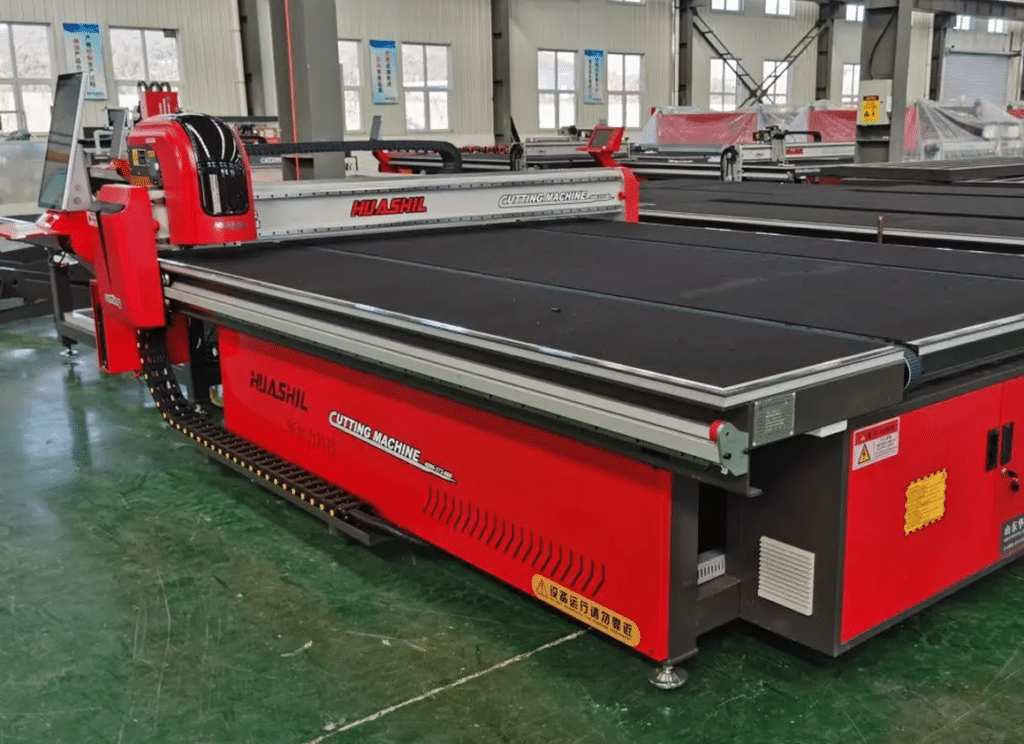
Complete Product Range for Diverse Requirements
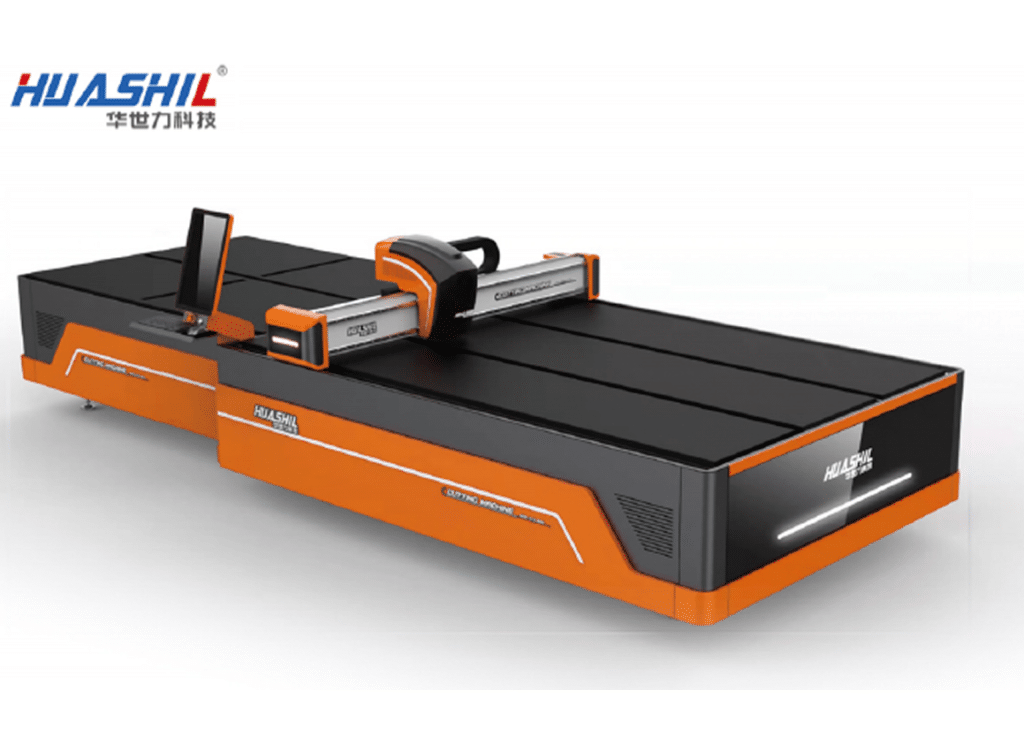
Huashil manufactures glass cutting equipment spanning manual systems for low-volume operations through fully automated production lines for high-capacity manufacturing. This product range enables appropriate solutions matching your current production scale while supporting expansion through compatible equipment additions.
The HSL-CNC2721 flagship model accommodates maximum glass sizes of 2700×2100mm with cutting thickness ranging from 2-19mm, providing versatility for diverse glass types and dimensions within a single machine platform. Integration options include storage systems, sorting equipment, and intelligent factory connectivity for Industry 4.0 implementations.
Customization and OEM/ODM Capabilities
Huashil provides customization services adapting standard product configurations to unique facility requirements, glass specifications, or workflow preferences. Custom cutting table dimensions, specialized loading systems, and tailored automation integration accommodate applications beyond standard product offerings.
OEM/ODM services enable private labeling for equipment distributors or development of specialized cutting solutions for unique glass processing applications. This flexibility ensures appropriate technical solutions regardless of production scale or product specialization.
Quality Assurance and Certifications
ISO 9001 quality management system certification demonstrates systematic quality control throughout manufacturing processes. CE marking confirms compliance with European safety and performance standards, facilitating international equipment deployment.
Production capabilities include precision laser cutting, CNC drilling, metal bending, welding, and grinding operations, enabling in-house component manufacturing rather than reliance on external suppliers. Internal production provides better quality control and faster response to custom component requirements.
Installation Support and Technical Training
Comprehensive installation support ensures proper equipment setup, calibration, and commissioning achieving published performance specifications. Factory-trained technicians supervise installations, verify cutting accuracy, optimize machine parameters, and train your operators on proper operation procedures.
Training programs cover machine operation, routine maintenance tasks, optimization software usage, troubleshooting common issues, and safety protocols. Thorough training reduces startup learning curves and helps production staff achieve full system utilization quickly.
Ongoing Service and Spare Parts Availability
Sustained technical support continues after installation through remote diagnostic capabilities, telephone consultation, and on-site service when necessary. Prompt spare parts availability minimizes downtime during repairs, maintaining production continuity and protecting your return on investment.
Conclusion
High speed glass cutting machine technology delivers measurable production improvements through cutting velocities reaching 200 m/min combined with automation eliminating manual handling bottlenecks. You achieve substantial benefits including increased daily throughput, reduced labor costs, improved material utilization through optimization software, and consistent quality meeting demanding application specifications. Successful implementation requires systematic evaluation of cutting speed, positioning accuracy, automation level, software capabilities, and integration requirements matched to your production volumes and glass processing applications.
Huashil provides specialized glass cutting expertise through comprehensive product offerings spanning manual systems to fully automated production lines supporting glass thicknesses from 2-19mm with cutting speeds up to 200 m/min. The company's manufacturing scale, customization capabilities, quality certifications, and sustained technical support position your glass fabrication operation for competitive advantages in production efficiency and quality management. Evaluate your cutting requirements and contact Huashil to discuss how high speed glass cutting technology optimizes your manufacturing operations.
Frequently Asked Questions
What cutting speed do I actually need for my production volume?
Calculate required cutting speed based on daily production targets and average cutting path length per sheet rather than maximum theoretical speed. For processing 300 sheets/day with average 12-meter cutting paths per sheet, you need total cutting capacity of 3,600 meters/day. At 200 m/min pure cutting speed, this represents 18 minutes of actual cutting time, but total cycle time including loading, optimization, and breakout typically extends to 3-4 hours of machine operation. Huashil's systems deliver 0-200 m/min cutting speeds providing flexibility for current needs and future growth.
Can high-speed machines maintain accuracy on thick glass?
Yes, properly designed high-speed glass cutting machines maintain specified accuracy across their complete thickness range when equipped with appropriate cutting pressure control and tool configurations. Huashil systems support 3-19mm glass thicknesses with cutting accuracy < ±0.25mm/m through automatic pressure adjustment systems that optimize cutting force based on detected glass thickness. Verify accuracy specifications explicitly state performance across your thickness range rather than assuming uniform precision.
How does cutting speed affect glass edge quality?
Cutting speed within manufacturer specifications generally does not compromise edge quality when cutting pressure and wheel condition remain appropriate. Excessive speeds beyond machine design limits may cause vibration, inconsistent score depth, or edge chipping. Modern CNC systems automatically adjust cutting parameters including speed and pressure for optimal edge quality based on glass thickness and type. Huashil machines maintain consistent edge quality throughout their speed range through integrated parameter management.
What maintenance do high-speed glass cutting machines require?
Daily maintenance includes visual inspection of cutting wheel condition, lubrication point checks, and glass debris removal from work surfaces. Weekly tasks involve cutting wheel replacement based on cutting distance (typically every 3,000-5,000 meters), air filter cleaning, and linear guide cleaning. Monthly maintenance includes detailed accuracy verification, comprehensive lubrication of all moving components, belt tension inspection, and cutting pressure calibration. Annual service typically requires professional technician inspection of servo motors, control systems, and complete accuracy recalibration.
Can I upgrade from manual to high-speed automated cutting gradually?
Yes, many manufacturers including Huashil offer compatible product lines supporting gradual automation expansion. You can begin with semi-automatic CNC cutting systems with manual loading, then add automated loading equipment, optimization software, and finally breakout automation as production volumes grow. Discuss your anticipated growth trajectory with Huashil's technical team to specify initial equipment supporting future expansion without requiring complete system replacement.
References
1: IQS Directory, "Types, Process, and Machines for Glass Cutting," 2024. Glass cutting tables can handle glass thicknesses ranging from 0.3cm to 1.9cm and operate at speeds up to 200 m/min with precision tolerances of ± 0.15 mm. https://www.iqsdirectory.com/articles/glass-cutting.html
2: Huashil Technology, "Ultimate Huashil Glass Cutting Machine Buyer Guide 2026," 2025. CNC Automatic cutting systems achieve 100-200 m/min cutting speeds with ±0.1mm accuracy for glass thickness 2-19mm. Systems support glass thicknesses from 2-19mm without requiring cutting wheel changes. https://huashil-china.com/huashil-glass-cutting-machine-full-product-range-pricing-overview-2026/
3: Huashil Technology, "Top 10 Reasons Huashili Leads Glass Automation Technology," 2025. Annual production output exceeds 1,000 units. Production capabilities include laser cutting, drilling, bending, welding, and grinding operations. ISO9001 certified quality control provides systematic quality assurance. https://huashil-china.com/huashili-20-years-of-smart-glass-processing-innovation/


" Talk to Na Na About This Machine "
Transform your glasswork with clear, clever, and efficient tech that
makes every process smooth. Connect with us and upgrade now!

Reliable, high-quality glass processing systems. Together, we’ll transform your vision into reality.
Company Info
Products Category
Contact
Copyright © 2026 huashil-china.com